


Indonesia doesn’t have one traditional wedding — it has hundreds. From the sacred Javanese Siraman to the fiery red of a Chinese-Indonesian tea ceremony, every ethnic group brings its own rituals, colors, and meanings to the altar.
Why Indonesia Has No Single “Traditional Wedding”
Ask ten Indonesians what a traditional Indonesian wedding looks like, and you’ll likely get ten different answers — and none of them would be wrong. With over 300 ethnic groups spread across more than 17,000 islands, Indonesia doesn’t have a single wedding template. Instead, it has a living archive of ceremonies: some rooted in Hindu cosmology, some in Islamic tradition, some carried over from centuries of Chinese trade and migration.
What ties them together isn’t the ritual itself, but the underlying idea — a wedding in Indonesia is rarely just about two people. It’s a negotiation between families, a display of heritage, and often a multi-day event involving an entire community. This guide walks through six of the most distinctive traditions that make up the modern Indonesian wedding landscape.

At a Glance
1. Javanese Weddings (The Siraman & Midodareni)

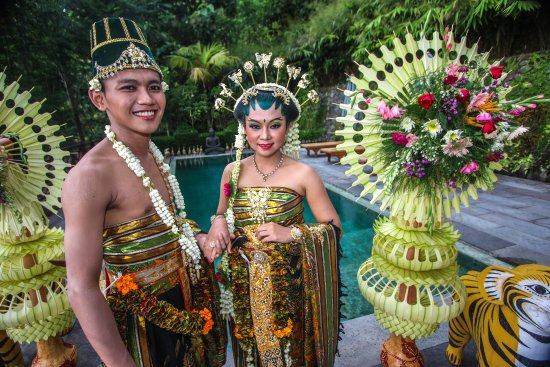
Javanese weddings are among the most elaborate in Indonesia, built around a sequence of pre-wedding rituals. The Siraman is a ceremonial bathing performed by parents and elders, symbolizing spiritual purification before the couple enters married life. It’s followed by the Midodareni, an evening ritual held the night before the wedding where the bride is believed to become as radiant as a heavenly nymph (widodari), while the groom is traditionally barred from seeing her until the ceremony itself.
2. Sundanese Weddings (Siger Crown & Egg Breaking)

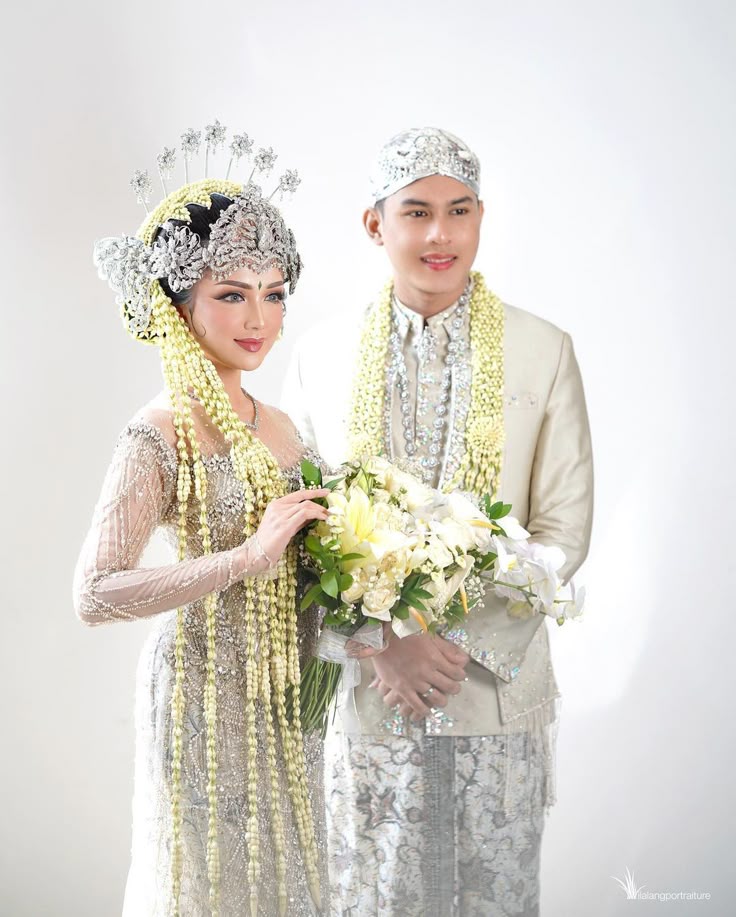
Rooted in West Java, Sundanese weddings are known for the ornate Siger crown worn by the bride, often paired with an elaborate welcome procession featuring umbul-umbul banners and flower petals. One of the most symbolic moments is the egg-breaking ritual, where the groom steps on an egg held by the bride — a gesture meant to represent his responsibility toward his new family and the beginning of a shared, humble household.
3. Balinese Weddings (Pawiwahan & Offerings)

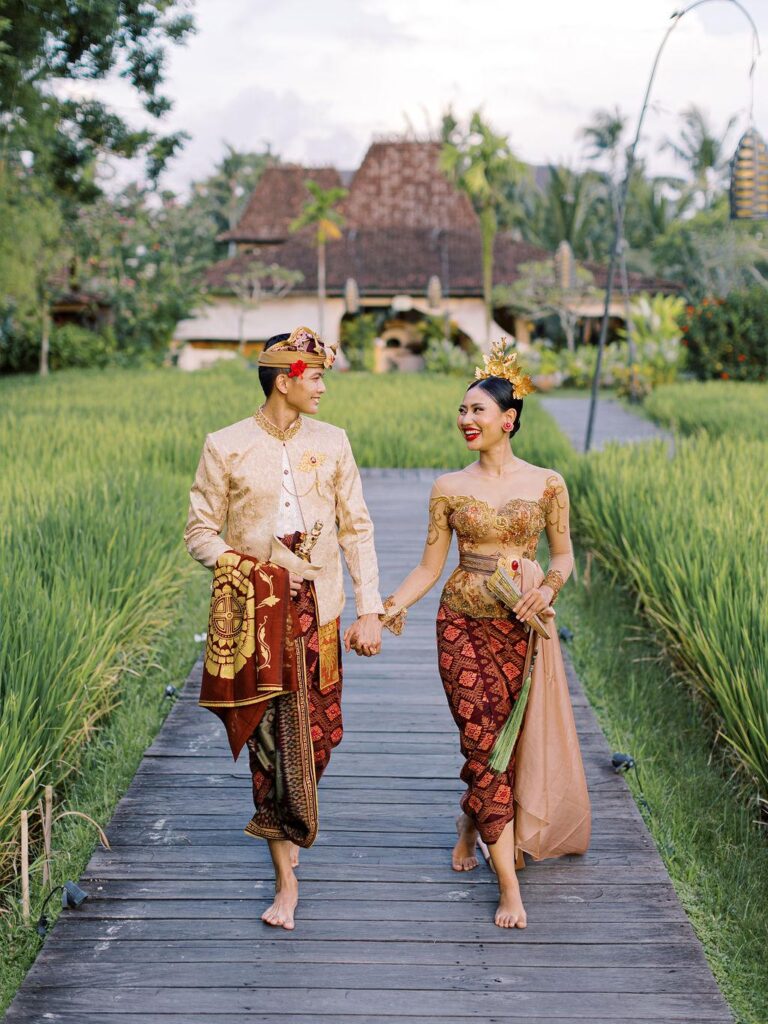
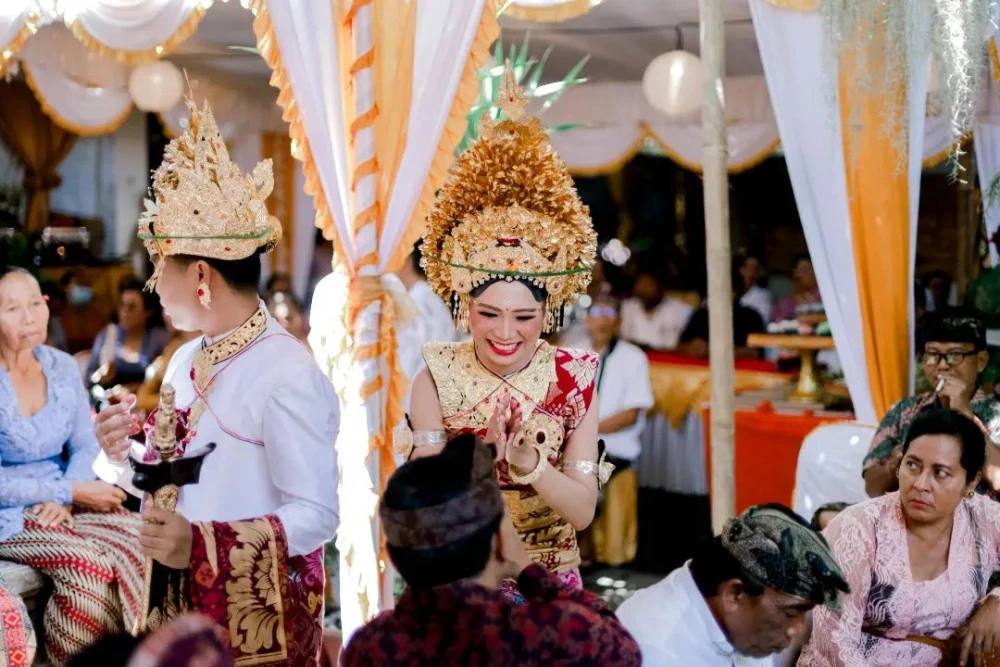
The Balinese wedding, or Pawiwahan, is a Hindu ceremony deeply tied to spiritual purification and community blessing. Offerings (banten) are prepared meticulously, and priests conduct rituals meant to unite the couple not just legally, but spiritually and cosmically. If you’re curious about how these customs extend beyond weddings into everyday Balinese life, our guide to common Balinese customs and traditions covers this in more depth. Couples planning a Balinese-style celebration can also explore some of the island’s most striking wedding venues in Bali, many of which are designed specifically to accommodate traditional Hindu ceremonies.
A wedding in Indonesia is rarely just about two people — it’s a negotiation between families, a display of heritage, and often a multi-day event involving an entire community.
4. Batak Weddings (The Ulos Ceremony)
Ulos:

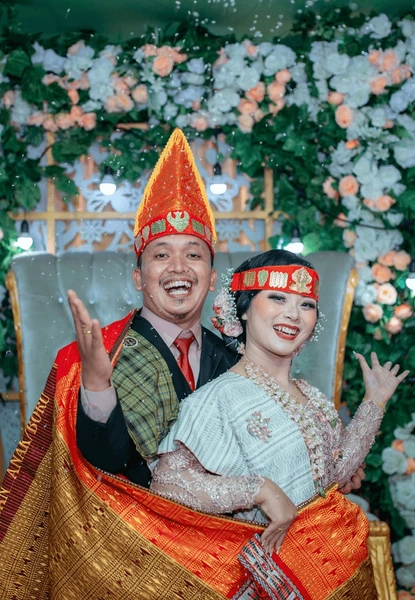
From North Sumatra, Batak weddings center around the Ulos — a handwoven cloth passed down through generations and draped over the couple by their parents. This act symbolizes warmth, protection, and the transfer of blessings from one generation to the next. Batak wedding ceremonies are also known for their formal, clan-based negotiations (mangalehon tuhor), reflecting the importance of extended family structures in Batak society.
5. Minangkabau Weddings

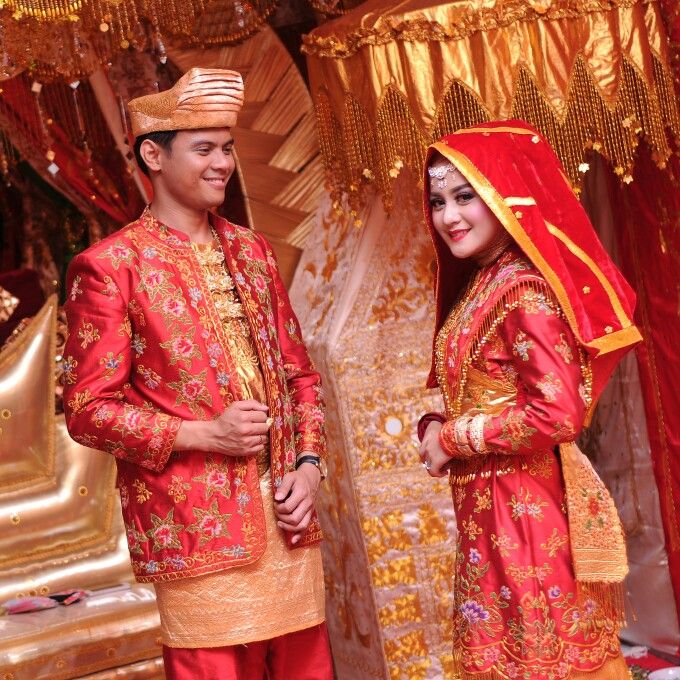
The Minangkabau people of West Sumatra follow a matrilineal system, which shapes their wedding customs uniquely — the groom is traditionally “picked up” by the bride’s family, a reversal of the more common patrilineal norm seen elsewhere in Indonesia. The bride’s headdress, shaped like curved buffalo horns, is one of the most recognizable bridal silhouettes in the archipelago, symbolizing strength and status.
6. Chinese-Indonesian Weddings (Sangjit, Tea, and Red Everywhere)
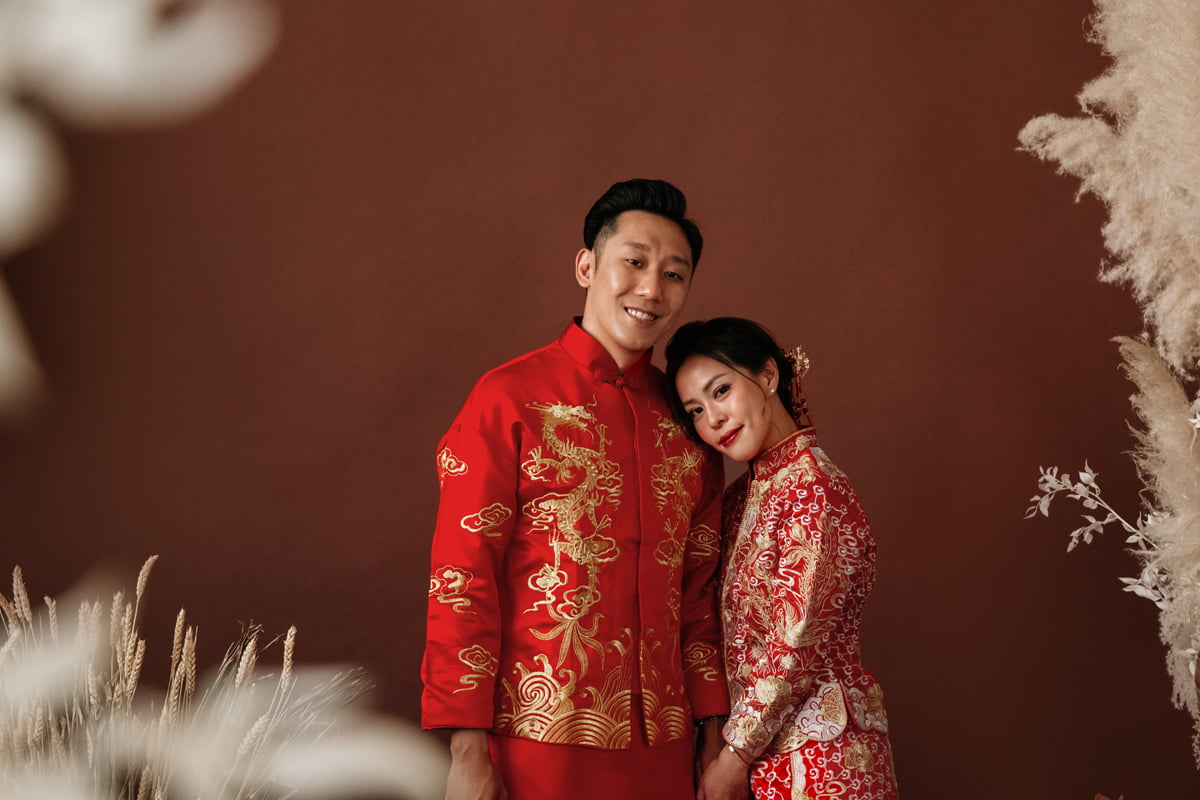
Chinese-Indonesian (Tionghoa) weddings bring a distinct set of rituals shaped by centuries of Chinese heritage blended with local Indonesian customs. Unlike the region-based traditions above, these ceremonies are practiced by Chinese-Indonesian families across the archipelago, regardless of which island they call home. Here are five traditions that define a Chinese-Indonesian wedding:
- Sangjit — the formal betrothal ceremony where the groom’s family presents gifts to the bride’s family, typically including jewelry, traditional cakes, and symbolic items representing prosperity and sincerity. It usually takes place about a week before the wedding and is reserved for close family only.
- Tea Ceremony (Tea Pai) — held on the wedding day itself, the couple serves tea to their parents and elders as a gesture of respect and gratitude. In return, they receive blessings and red envelopes (angpao) containing money.
- Hair Combing Ceremony — performed separately by the bride and groom on the eve of the wedding, usually by a parent, symbolizing the transition from childhood into married adulthood.
- The Wedding Banquet — a lavish, multi-course feast where each dish carries symbolic meaning, from longevity noodles to dishes representing prosperity and happiness for the couple.
- The Color Red — more than just an aesthetic choice, red is woven into nearly every element of a Chinese-Indonesian wedding, from decorations to attire to gift wrapping, representing good fortune and joy.
Many of these rituals faded from public view during Indonesia’s New Order era, when expressions of Chinese culture were restricted. Since the late 1990s, however, Chinese-Indonesian couples have increasingly revived these traditions, often blending them with modern wedding planning or with elements from their partner’s own ethnic background — a reflection of Indonesia’s broader story of cultural fusion.
Conclusion
From Javanese purification rituals to the red-drenched symbolism of a Chinese-Indonesian tea ceremony, a traditional Indonesian wedding is never just one thing — it’s a reflection of the country’s extraordinary ethnic diversity. Whether you’re planning a wedding yourself or simply curious about weddings in Indonesia, understanding these six traditions offers a window into how deeply culture, family, and heritage remain woven into modern Indonesian life.
FAQ
What is a traditional Indonesian wedding like?
There isn’t one single format — a traditional Indonesian wedding varies significantly by ethnic group, ranging from Hindu Balinese ceremonies to Islamic Javanese rituals to Chinese-Indonesian tea ceremonies, each with its own symbolism, attire, and multi-day sequence of events.
What makes a traditional Balinese wedding different?
A traditional Balinese wedding, called Pawiwahan, is a Hindu ceremony centered on spiritual purification and elaborate offerings (banten), conducted by a priest to unite the couple both legally and spiritually.
What is Sangjit in a Chinese-Indonesian wedding?
Sangjit is a formal pre-wedding betrothal ceremony where the groom’s family presents gifts, such as jewelry and traditional cakes, to the bride’s family as a symbol of respect and commitment.
Why is red so important in Indonesian weddings?
Red symbolism is most prominent in Chinese-Indonesian weddings, where it represents good fortune, happiness, and prosperity. Other ethnic traditions in Indonesia use different symbolic colors, such as gold in Javanese ceremonies.
Do all ethnic groups in Indonesia have different wedding traditions?
Yes. With over 300 ethnic groups across the archipelago, wedding customs vary widely — this guide covers six of the most distinctive ones, but many more regional variations exist across Indonesia’s islands.