



So you’re in Bali, you had an amazing day by the beach — and then your stomach had other plans. If you’re dealing with cramps, urgent bathroom trips, and a general sense of dread, you’ve probably caught Bali Belly. The most pressing question on your mind right now is: how long does Bali Belly last?
For most travelers, Bali Belly lasts between 1 to 5 days. Mild cases — especially when you rest, stay hydrated, and eat light — can clear up in as little as 24 to 48 hours. More moderate cases typically run 3 to 4 days, while severe infections or those caused by parasites can stretch beyond a week. The good news? The vast majority of people recover fully without needing hospital treatment.
Quick Answer: How Long Does Bali Belly Last?
| Severity | Typical Duration |
|---|---|
| Mild | 1–2 days |
| Moderate | 3–4 days |
| Severe | 5–7 days |
| Parasitic infection | 1–4 weeks (requires medication) |
The timeline depends on a few key factors: what caused the infection (bacteria, virus, or parasite), how quickly you start rehydrating, and whether or not you seek treatment. The sooner you act, the faster you recover.
What Is Bali Belly?
Bali Belly is the informal name for traveler’s diarrhea — a digestive illness that affects tourists visiting Bali. Medically speaking, it’s a form of gastroenteritis caused by bacteria, viruses, or parasites entering your digestive system through contaminated food or water.
It’s incredibly common. Thousands of tourists experience it every year, particularly visitors from Australia, the UK, Europe, and the US — places where food hygiene standards are stricter and where locals haven’t built immunity to the microbes found in Bali’s food and water supply.
The good news is that Bali Belly is rarely dangerous for healthy adults. It’s uncomfortable, sometimes miserable, but usually short-lived.
Common Bali Belly Symptoms
Symptoms can vary from person to person, but the most common ones include:
- Diarrhea — often watery, urgent, and frequent (this is the hallmark symptom)
- Stomach cramps and abdominal pain
- Nausea
- Vomiting
- Bloating and gas
- Fatigue and weakness
- Loss of appetite
- Low-grade fever (in some cases)
Symptoms typically appear between 6 to 24 hours after eating or drinking something contaminated — though in some cases it can take up to 72 hours. If you went out for dinner and woke up at 2 AM feeling terrible, that timing is very consistent with Bali Belly.
What Causes Bali Belly?
The most common culprits are:
Bacteria — E. coli, Salmonella, Shigella, and Campylobacter are the most frequent offenders. These bacteria thrive in tropical climates and contaminate food that’s been improperly stored, undercooked, or prepared with unhygienic hands.
Viruses — Norovirus is a major cause of sudden, intense Bali Belly. It spreads quickly in crowded resorts, restaurants, and tour groups. Viral cases tend to be shorter but hit hard.
Parasites — Giardia and Cryptosporidium are less common but more stubborn. They come mainly from contaminated water and can cause symptoms that linger for weeks without proper treatment.
Environmental factors — Bali’s warm, humid climate accelerates bacterial growth in food. Refrigeration isn’t always reliable, and tap water across the island is not safe to drink.
How Do Travelers Usually Get Bali Belly?
Most people don’t realize they’ve made a risky choice until it’s too late. The most common ways travelers pick up Bali Belly include:
- Drinking tap water or water from uncertain sources
- Eating ice cubes at street food stalls (ice at established restaurants is generally safer)
- Eating raw or undercooked seafood, meat, or eggs
- Eating salads or fresh fruit washed with tap water
- Swallowing water while swimming in pools or rivers
- Not washing hands before eating
- Eating food left out in the heat for too long
Street food isn’t necessarily the villain it’s made out to be. Some of the best meals in Bali come from local warungs. The key is freshness and heat — food cooked and served hot is far safer than something that’s been sitting in the sun.

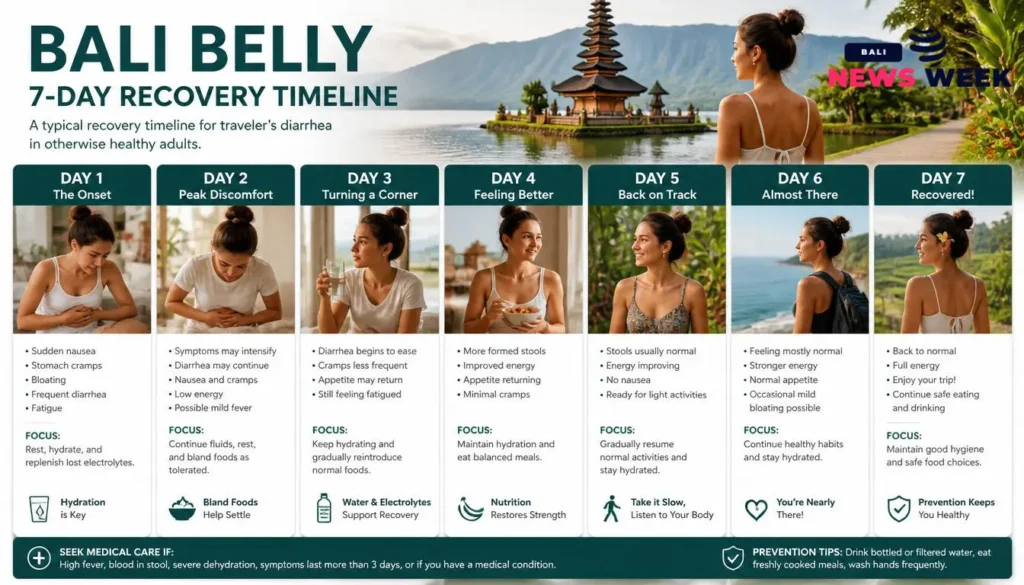
Bali Belly Recovery Timeline: Day by Day
Understanding what to expect each day makes the whole experience far less scary. Here is your complete Bali Belly recovery timeline.
⏱ First 24 Hours
This is often the worst of it. Symptoms hit fast and hard. You may be spending a lot of time near the bathroom, dealing with cramps, nausea, and possibly vomiting. Your energy will feel depleted. The most important thing right now is hydration — start sipping water and oral rehydration salts (ORS) immediately. Avoid solid food if nausea is strong, and rest as much as possible.
⏱ 24–48 Hours
Many mild cases start improving during this window. The frequency of bathroom trips may begin to decrease, and nausea often starts to ease. You can try introducing bland foods like plain white rice, bananas, or plain toast. Keep drinking fluids constantly — dehydration remains your biggest risk here. If you’re not seeing any improvement after 48 hours, speak to a doctor.
⏱ Days 3–5
If you had a moderate case, you’re likely still recovering but starting to feel more human. Cramping becomes less intense and energy slowly returns. Stick to a gentle diet and avoid anything spicy, oily, or alcoholic. Some travelers feel 80% better by day 4 then push too hard — heading out sightseeing or eating a full meal — only to have symptoms flare back up. Ease into recovery carefully.
⏱ Days 5–7
Most uncomplicated cases of Bali Belly are well and truly resolved by this point. You should feel close to normal. If you’re still experiencing significant diarrhea or cramps after day 5, a parasitic infection or something more serious may be the cause. At this stage, medical assessment is important — not optional.
⏱ Beyond One Week
If symptoms persist beyond 7 days — especially recurring diarrhea, bloating, fatigue, or weight loss — you likely need medical treatment. Parasites like Giardia won’t clear up on their own. A stool test can identify the cause, and prescription medication will usually resolve it within a few more days.
How to Recover Faster From Bali Belly
Recovery doesn’t have to mean lying in a dark hotel room for a week. There are things you can actively do to help your body bounce back.
1. Rehydrate aggressively. This is the single most important thing. Diarrhea and vomiting strip your body of fluids and electrolytes fast. Drink water constantly, and add oral rehydration salts (available at most Bali pharmacies for a few thousand rupiah). Coconut water is a great natural alternative.
2. Follow the BRAT diet. Bananas, Rice, Applesauce, and Toast — these bland, low-fiber foods are gentle on an irritated gut. Once you can stomach solids, start here.
3. Rest — seriously. Your immune system needs energy to fight the infection. Trying to push through and keep sightseeing will almost certainly make things worse and extend your recovery time.
4. Try probiotics. Some evidence suggests probiotics help restore good bacteria in your gut after an infection. Look for probiotic supplements or plain, unsweetened yogurt once your stomach starts to settle.
5. Use appropriate medications. Loperamide (Imodium) can reduce diarrhea frequency — useful if you need to travel or board a flight. However, don’t use it if you have a fever or blood in your stool, as it can trap infection. Antiemetics (anti-nausea medication) can help if vomiting prevents you from keeping fluids down.
6. Avoid these entirely until you’re well: Alcohol, dairy, spicy food, oily food, raw vegetables, and caffeine.
When Should You See a Doctor?
Bali Belly is usually self-limiting, but there are clear warning signs that mean you should not wait it out alone.
Seek medical attention if you have:
- ❌ Bloody or black stools — could indicate a serious infection or intestinal bleeding
- ❌ High fever (above 39°C / 102°F)
- ❌ No improvement after 48–72 hours
- ❌ Severe vomiting that prevents keeping any fluids down
- ❌ Signs of dehydration — dry mouth, dizziness, dark urine, or no urination for 8+ hours
- ❌ Symptoms lasting more than 5–7 days
Bali has many English-speaking clinics, particularly in Seminyak, Canggu, Ubud, and Kuta. Many offer in-villa or hotel visits, so you don’t need to physically travel to get assessed when you’re at your worst.
What Foods Should You Eat After Bali Belly?
Knowing what to eat — and what to avoid — makes a real difference in how quickly your gut heals.
✅ Eat These
- Plain white rice
- Bananas
- Plain toast or crackers
- Clear broths and soups
- Boiled or steamed potatoes (no butter or cream)
- Plain boiled or scrambled eggs (once tolerating food)
- Steamed soft vegetables
- Plain yogurt with live cultures (once symptoms settle)
❌ Avoid These
- Spicy food (the sambal can wait)
- Alcohol
- Dairy products (milk, cheese, ice cream)
- Fried or oily food
- Raw salads or raw vegetables
- High-fiber foods (whole grains, beans, legumes)
- Coffee and caffeinated drinks
Reintroduce normal foods gradually. Don’t jump from plain rice to a full nasi goreng the moment you feel slightly better. Give your gut one to two extra days of gentle eating before returning to your usual diet.
How to Prevent Bali Belly During Your Bali Trip
You can dramatically reduce your risk with a few smart, consistent habits. Prevention is always easier than treatment.
Only drink bottled or sealed water. Never drink from taps, and use bottled water even for brushing your teeth.
Be careful with ice. Ice at established restaurants and cafes is generally made with filtered water and is usually safe. Avoid ice from street food stalls where sourcing is uncertain.
Wash your hands frequently. Before every meal and after every bathroom visit. Carry hand sanitizer for times when soap isn’t available.
Choose freshly cooked, hot food. Heat kills bacteria. Food that just came off the grill is far safer than something sitting in the tropical heat for hours.
Peel your fruit. Stick to fruit you can peel yourself — mangoes, bananas, mangosteens. Pre-cut fruit from markets carries more risk.
Consider probiotics before you travel. Starting a probiotic course a week before arriving in Bali can help build gut resilience. There’s reasonable evidence this reduces the severity of traveler’s diarrhea.
Keep your accommodation clean. Wash your hands when returning from being out, and avoid touching your face without washing first.
Pros and Cons: Self-Managing vs. Seeking Medical Care
| Self-Manage at Hotel/Villa | Seek Medical Care | |
|---|---|---|
| Cost | Cheaper short-term | May cost more (use travel insurance) |
| Comfort | Rest in familiar surroundings | Requires getting to or calling a clinic |
| Recovery speed | Slower — depends on body’s immune response | Faster with correct diagnosis and medication |
| Risk | Could miss a serious infection or parasite | Very low — professional assessment |
| Best for | Mild cases improving within 48 hours | Moderate-severe, worsening, or fever cases |
Expert Travel Tips for Bali
- Pack a Bali Belly emergency kit before you fly: ORS sachets, loperamide (Imodium), a basic probiotic, and an antiemetic. Having these at 3 AM in your hotel room is genuinely invaluable.
- Get travel insurance that covers illness. Bali’s private clinics are excellent, but costs add up quickly — especially if you need IV treatment or an in-villa doctor’s visit.
- Don’t fly with active, severe Bali Belly — particularly with a fever or blood in your stool. Altitude changes worsen dehydration, and it’s deeply unpleasant for everyone on board.
- Tell your hotel or villa staff. Most Bali accommodations are experienced with Bali Belly. They can often arrange medical help, electrolyte drinks, and simple food quickly.
- The rainy season (November–March) carries slightly higher risk due to increased potential for water contamination. Be extra cautious with food and drink choices during this period.
- First time in Bali? Understanding how the local economy works can help you navigate the island as a smarter traveler — our piece on kenapa UMR Bali kecil offers some useful local economic context.
Frequently Asked Questions (FAQ)
Can Bali Belly last 2 weeks?
It can, but it’s not typical for uncomplicated cases. If your symptoms are still significant after 7 days, you likely have a parasitic infection such as Giardia, which won’t resolve without prescription medication. A stool test can confirm the cause, and treatment usually clears it up within a few more days after that.
Is Bali Belly food poisoning?
Bali Belly is closely related to food poisoning but isn’t exactly the same thing. Food poisoning usually refers to illness caused by toxins already in food — with a very fast onset. Bali Belly is traveler’s diarrhea, caused by live bacteria, viruses, or parasites. The symptoms often overlap and the line between them can blur. Both involve contaminated food or water at the source.
Can I fly with Bali Belly?
For mild cases with no fever and symptoms that are clearly improving, flying is generally manageable. Stay well hydrated, keep loperamide on hand, and book an aisle seat. However, if you have a high fever, blood in your stool, or are severely dehydrated, don’t fly until you’ve been assessed by a doctor and your condition has stabilized.
What medicine helps Bali Belly?
The most commonly used options include oral rehydration salts (ORS) for hydration, loperamide (Imodium) to reduce diarrhea frequency, and antiemetics for nausea and vomiting. In confirmed or suspected bacterial cases, a doctor may prescribe antibiotics like azithromycin or ciprofloxacin. For parasitic infections, metronidazole or tinidazole are commonly used. Always consult a doctor before starting any antibiotics.
Can Bali Belly go away on its own?
Yes — in most mild to moderate cases, Bali Belly resolves without medication. Your immune system can fight off bacteria and viruses within a few days provided you keep hydrated and rest. However, parasitic infections typically do not clear on their own and require specific prescription treatment.
Key Takeaways
- Bali Belly typically lasts 1–5 days. Mild cases can resolve in 24–48 hours with proper care.
- The most important thing you can do is stay hydrated — use oral rehydration salts, not just plain water.
- Follow a gentle BRAT diet (bananas, rice, applesauce, toast) while symptoms are active.
- Rest is non-negotiable — pushing through will prolong your recovery.
- If symptoms don’t improve within 48–72 hours, or if you develop a fever or blood in your stool, see a doctor immediately.
- Parasitic infections need prescription medication and won’t clear on their own.
- Smart prevention habits — bottled water, freshly cooked food, regular handwashing — dramatically reduce your risk.
- With the right approach, Bali Belly doesn’t have to ruin your holiday.
Disclaimer: This article is for informational purposes only and does not constitute medical advice. Always consult a qualified healthcare professional for personalized diagnosis and treatment.