


Bali has become one of Southeast Asia’s leading destinations for accessible health screening. From digital nomads and long-stay visitors to travelers seeking peace of mind, more people are choosing to get blood tests while on the island.
However, not all testing services offer the same experience. Government clinics, hospital laboratories, and private wellness centers differ in convenience, turnaround time, and how results are explained. This guide explores what to expect from blood diagnostics at a Bali wellness center, how to compare your options, and what to consider before choosing a testing package.
Why Blood Diagnostics Have Become Part of the Bali Wellness Scene
Wellness tourism in Bali used to mean yoga retreats and spa days. That has shifted. A growing number of visitors now treat the island as a place to actively check in on their health, not just relax.
A few forces are driving this:
- Long-stay visa requirements. KITAS applications and certain visa extensions ask for recent medical documentation, pushing many expats toward a lab visit early in their stay.
- Preventive health culture. Health organizations have long pointed out that a large share of chronic conditions can be caught early through routine screening, and that message has filtered into the wellness industry’s marketing.
- Tropical health realities. Dengue, typhoid, and “Bali belly” are common enough that a fast, accurate blood panel is often the quickest way to confirm what’s actually going on, rather than guessing from symptoms alone.
- Biohacking and performance culture. Digital nomads and fitness-focused travelers increasingly want hormone panels, micronutrient checks, and metabolic markers — not just a basic check-up.
This is where the line between a “medical lab” and a “wellness center” starts to blur. Many Bali clinics now position blood work as part of a broader recovery and prevention offering, sitting alongside services like IV drips, nutrient infusions, and doctor consultations.
What a Typical Blood Diagnostics Package Includes
Packages differ by provider, but most fall into a few recognizable tiers. Understanding the tiers helps you avoid paying for tests you don’t need, or worse, missing a marker that actually matters for your situation.
Basic Panel
Usually aimed at travelers who just want a general health snapshot. Common inclusions:
- Complete Blood Count (CBC) — checks for infection, anemia, and general blood health
- Fasting blood glucose
- Basic cholesterol or lipid profile
- Doctor consultation to interpret results
Intermediate / Organ Function Panel
Designed for expats staying longer term or anyone managing a known condition:
- Liver function tests (AST/SGOT, ALT/SGPT)
- Kidney function (creatinine, BUN, eGFR)
- HbA1c for longer-term blood sugar trends
- Electrolytes
Advanced / Performance Panel
Increasingly popular among long-term residents and fitness-oriented visitors:
- Hormonal markers (testosterone, thyroid panel: TSH, Free T3, Free T4)
- Inflammation markers (hs-CRP)
- Vitamin D, B12, iron studies, ferritin
- Cortisol and stress-related markers
Comparison at a Glance

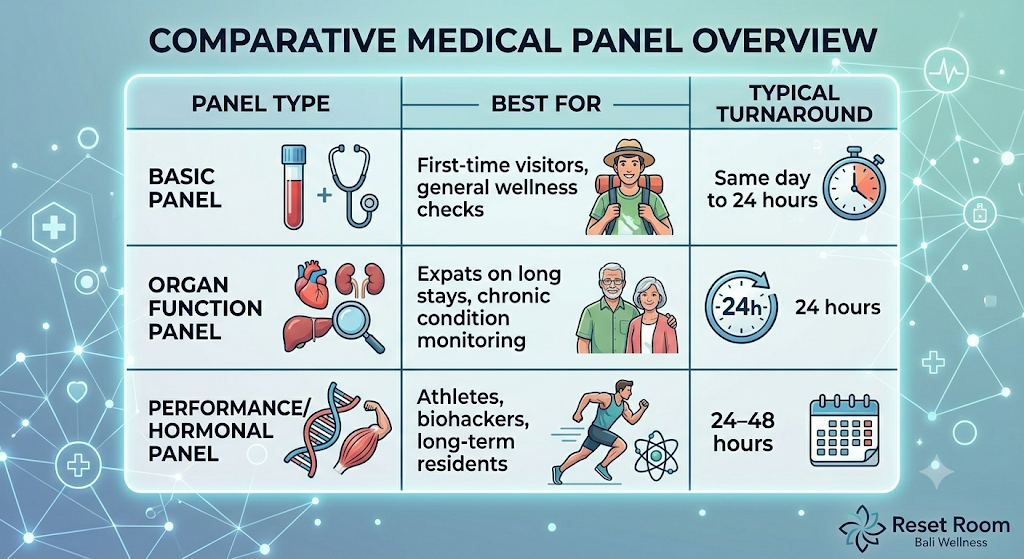
Most reputable providers will also offer a doctor’s explanation of results rather than just handing over a printout, which matters more than it sounds, a number on a lab report means very little without clinical context.
In-Clinic Testing vs. Mobile Sample Collection
One practical decision travelers face is whether to visit a clinic in person or book a home/villa visit. Both have trade-offs worth weighing.
In-clinic testing tends to offer:
- Slightly faster processing since samples don’t need transport time
- Access to on-site equipment for additional checks (ECG, basic imaging)
- A more “medical” environment if you’re also dealing with acute symptoms
Mobile or home-service collection tends to offer:
- Convenience for people recovering from illness, jet lag, or hangover symptoms
- Privacy, particularly for sensitive panels like sexual health screening
- A better fit for villa-based digital nomads without easy transport
Neither option is universally “better”; it depends on whether you’re testing proactively or because you’re already feeling unwell.
Reading Your Results: What Actually Matters
A common mistake among first-time test-takers is treating every number on a lab report as equally urgent. In reality, context matters more than any single value:
- Trends over time matter more than a single snapshot, especially for markers like cholesterol or HbA1c.
- Reference ranges vary slightly between labs, so don’t panic if a number looks slightly different from a previous test done elsewhere.
- Symptoms plus labs, not labs alone, should guide any decision about treatment. A flagged marker with no symptoms is a different conversation than the same marker with persistent fatigue or pain.
- Hydration and recent meals can temporarily skew certain results, which is one reason fasting instructions exist for glucose and lipid panels.
If you’re trying to decide between routine bloodwork and something more targeted, providers offering structured options such as bloodwork Uluwatu often break this down by goal, general wellness, hormonal health, or athletic performance, rather than offering a single one-size-fits-all panel.
When Diagnostics Pair Well With Recovery Support
Blood diagnostics are often offered alongside recovery services at wellness clinics, especially for people experiencing dehydration, travel fatigue, or the effects of a big weekend. For those wondering how to recover faster, options like IV therapy Bali may complement blood testing by providing targeted support based on individual health needs.
This reflects a broader shift in Bali’s wellness scene, where ongoing health monitoring is paired with personalised treatments to support long-term wellbeing rather than simply addressing symptoms.
Choosing a Provider: Questions Worth Asking First
Before booking, it’s worth getting clear answers on a few practical points:
- Is the lab itself licensed, or does the clinic outsource samples to a certified laboratory?
- How long until results are ready, and how are they delivered (digital report, printed, doctor call)?
- Does the package include a consultation to interpret results, or just raw numbers?
- Is fasting required, and for how long?
- Is mobile/home collection available if you’re unwell or without transport?
Clinics that operate with a wellness-and-prevention framing, such as Reset Room Bali, often structure their offerings around these exact questions, pairing testing with consultation rather than treating bloodwork as a standalone transaction.
FAQ
Q: Do I need to fast before a blood test in Bali?
A: It depends on the panel. Tests involving blood glucose, HbA1c, or a full lipid/cholesterol profile typically require 8–10 hours of fasting beforehand, though plain water is usually fine. Panels focused only on hormones or infection markers often don’t require fasting, check with your provider in advance.
Q: How fast can I get blood test results in Bali?
A: Most private clinics and wellness centers return basic results within 24 hours, with some same-day options for simpler panels. More specialized hormonal or micronutrient panels can take 24–48 hours depending on whether the lab processes them on-site or sends them to a reference laboratory.
Q: Is a wellness center blood test as reliable as a hospital lab?
A: Reliability comes down to whether the underlying laboratory is certified, not whether the front-end experience feels like a clinic or a hospital. Many wellness-style centers in Bali partner with accredited laboratories, so it’s reasonable to ask directly which lab processes the samples and what certification it holds.